
©2026 Chris McWain
Just build it ✔
June 5, 2026 at 19:21
Just build it ✔
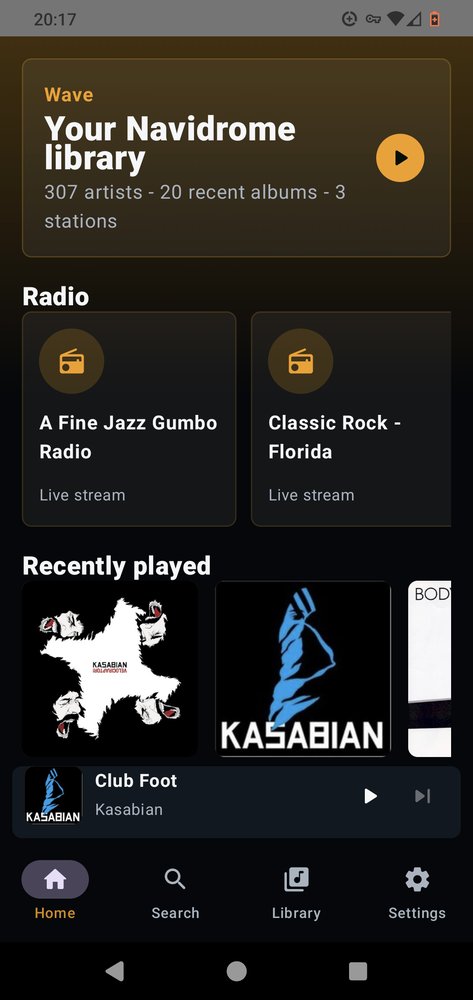
So there’s a large NAS in my closet that is full of FLAC files and an install of Navidrome on it. For those of you that haven’t played with it yet, Navidrome is an open-source music library manager. The library continually grows as I discover new music. The problem is that Navidrome’s default web app isn’t very good. Playback breaks and the UI is clunky to use since it’s through a browser session. Ideally there should be an app that plays my music on the phone when I’m out, on Android TV when sitting around, and also in the car with a fancy Android Auto screen.
The open-source options weren’t bad, but they all had limitations. If I wanted a feature, I was at someone else’s mercy to agree and add an update. Existing apps that came close either had a hidden paywall or missing features. So I built my own.
I’m new to Android dev, so I used Codex to skip the part where I read 400 pages of documentation and fight with dependencies for days. What I actually like about AI is how flexible it is. It can be your teacher, your partner, or just the intern you hand the boring stuff to. I learned quickly to hand it all the boring stuff in situations like this. I’d rather spend my time on actual problem solving than on tedious details and system dependency management that I couldn’t care less about. I build, design, tweak, customize, and troubleshoot. AI handles all the leftover crap.
So this week, I made Wave - a Navidrome client for Android. It works on your phone, your TV, and in your car. It’s simple, lightweight, and streams directly from my music library. For Android TV, I am trying to incorporate projectM (similar to Milkdrop) visualizations, album artwork, and will eventually pull in music-focused APIs for band pictures, lyrics, backstories, related artists, top songs, and auto-generated playlists. The possibilities are endless when you build your own stuff.
AI gets a lot of hate right now with the data center build-outs, energy consumption & environmental impact, increased hardware prices, and the potential job losses. That’s all real and worth considering, but it’s also a really neat tool. If you’re passionately against it, just be aware that It’s not going anywhere. We’re currently watching massive corporations playing musical chairs over something potentially worth trillions. The spending is endless and nobody knows yet if the math works out, but that’s their problem. In the meantime, I’m going to use AI as much as possible.
Whenever a new tech comes out, the first few years are golden. When WiFi was first made commercial and people were putting it in their homes, it was the perfect time to get into network security and wardriving. Those were some fun years. Now it’s boring and somewhat confusing as to what all the different 802.11a/b/g/x/ac/6/7/wtf options there are. This new AI generation feels the same way, but it’s only going to get more locked down and commercial from here. Let’s just hope whoever comes out on top doesn’t ruin all the fun (looking in Google’s buzzkill direction).
What I care about most is what it means for regular people. Someone with a great story and no budget can practically make an entire movie. Another average Joe with a unique problem doesn’t have to wait for a corporation to half-ass a solution, charge a subscription, harvest their data, sell it to whoever’s buying, and then quietly update the terms of service six months later. They can just build the thing and make it exactly what was needed. No spying, no ads, or any data-harvesting involved.
I honestly never thought I’d make an Android Auto app. Spending months learning the annoying details behind Android development sounds awful. I wanted a solution, built the way I wanted it, and ideally before losing sanity and interest. Codex handled the annoying parts, while I handled the parts that mattered. I still learned much more than expected, and the next app will start from a much better place.
That’s the part worth paying attention to. It’s not the corporate arguing, the shoving of AI into every nook and cranny, or the fact that you can’t buy RAM without selling your soul. The part where regular people get more control over their own stuff is the really neat part few of us are paying attention to.
Switching gears now, I’m using Twitter(X) and social media less and less. The value just isn’t there. One major problem is that it was the only way readers could reach me, so I’ll need to come up with another method that doesn’t need aggressive micro-managing. If you have any ideas, let me know.
Site Update: Working with the new Stream section has got me focused on keeping my content here and away from massive, data-harvesting companies. Plus it’s fun. I just added an RSS XML feed if you dare to subscribe. It’s much more “high-flow” than my long form posts. You are warned.
Privacy update: I removed all unnecessary external dependencies like Google fonts. Now the only tracker allowed on this site is Cloudflare, but that’s because they host the cache, proxy, and AI scraping filters.
Last thing: Mark now has Hugo blog automation that’ll make posts much less tedious to make, so expect more updates from me.

Until next time, Cheers!
Questions or comments?